 Skip to content
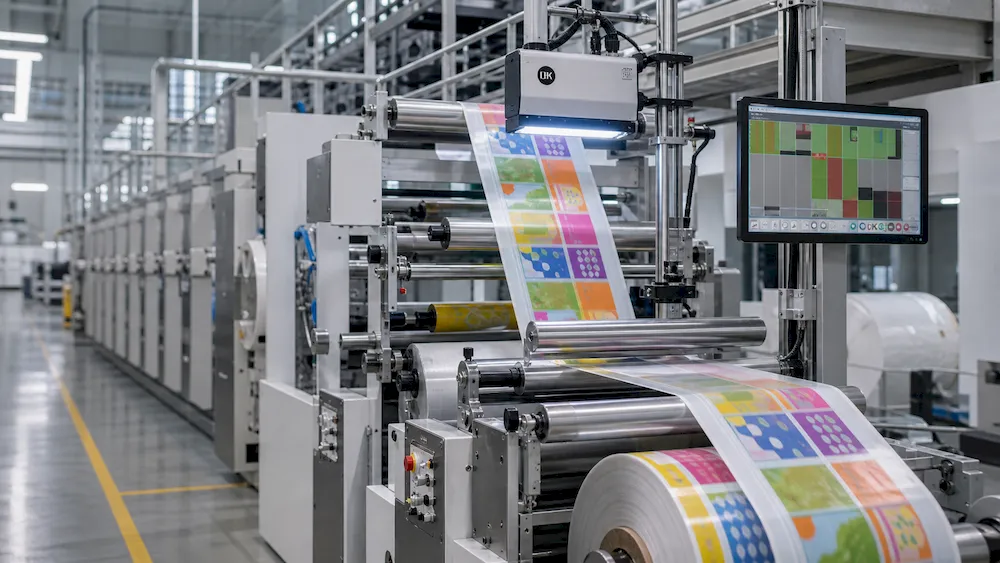
Web monitoring vs 100% print inspection is a common point of confusion in real projects.
HI,i’m Bruce from China.
Sometimes a buyer says, “We need to inspect the web during production.” But that sentence can mean two very different things. One factory only wants the operator to see the moving material more clearly. Another factory wants the system to detect defects automatically, store images, mark defect positions, and give alarms during production.
These two needs should not be quoted as the same project.
In Bainary’s product direction, web monitoring and 100% print inspection are related, but they are not interchangeable. If the target is not clear at the beginning, the quotation, installation plan, and buyer expectation can all go in the wrong direction.
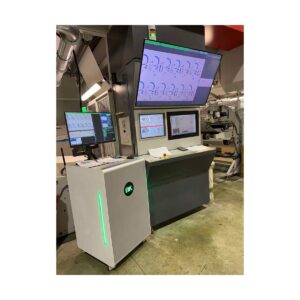
Below is a practical explanation of the difference. In many projects, web monitoring vs 100% print inspection is the real decision behind the quotation request.
1. What Does A Web Monitoring System Actually Do?
A web monitoring system is mainly for viewing.
It helps the operator observe the moving web more clearly during production. This is useful when the line speed is high, the print repeat is small, or the operator cannot judge the running condition well with the naked eye.
Typical purposes include:
- checking print position during running
- observing whether the pattern is stable
- checking whether the web shifts left or right
- watching visible surface problems during production
- helping the operator respond earlier when something starts to go wrong
For this kind of task, the system is usually closer to an observation tool than an automatic judgment tool.
That is the main direction of the OR Series Web Monitoring System. It is useful when the operator needs a clearer view of the moving web, especially on printing, converting, or rewinding sections where visual observation is difficult.
2. What Does A 100% Print Inspection System Actually Do?
A 100% print inspection system is not only for viewing. It is for automatic defect detection.
The target is usually to detect defects across the full running web and record what happened during production.
Typical functions may include:
- automatic defect detection
- defect image capture
- defect recording
- alarm output
- repeat defect tracking
- defect position marking
- defect map or roll report
- traceability support
This direction is much closer to a quality-control system than a simple monitoring tool.
For example, if the factory wants to detect missing print, streaks, color deviation, registration problems, label defects, barcode problems, coating skip, or foreign matter automatically, then a 100% inspection direction should be discussed first, not only web monitoring.
This is where products such as the OK8000 100% Full-Surface Inspection System or the OK6000 Application-Based Online Quality Inspection System become more relevant.
3. The Main Difference Is Not The Camera. It Is The Job To Be Done.
Some buyers try to compare the two directions only by camera, screen, or price.
That comparison is usually too shallow.
The real difference is the job the system is expected to do.
If the goal is:
- “Let the operator see the web better”
- “Check whether the print is moving normally”
- “Watch the running material during setup or production”
then web monitoring may be enough.
If the goal is:
- “Find defects automatically”
- “Reduce missed defects”
- “Keep image records”
- “Stop or alarm when defects appear”
- “Support customer complaint tracing”
then 100% print inspection is the more suitable discussion.
This is where many projects go wrong. The buyer asks for a lower-cost viewing system, but the factory really expects automatic defect judgment. Later, they feel the system is not enough, even though the original selection target was never clearly defined.
4. Typical Factory Situations
Situation A: Operator monitoring is the real need
A flexible packaging or label line may run fast enough that the operator cannot observe every repeat clearly.
The factory mainly wants:
- clearer image display
- easier visual observation
- better running visibility during setup
- easier judgment of print position or material behavior
In this case, web monitoring is often the practical direction.
Situation B: Automatic defect detection is the real need
Another factory may already know that customer complaints come from missed defects, repeat defects, or unstable print quality that the operator cannot catch in time.
They may need:
- automatic defect detection
- defect records for traceability
- alarm output
- image evidence for quality review
- roll-level quality review after production
In this case, a 100% print inspection system should be discussed first.
Situation C: The line also has instability problems
Sometimes the image problem is not inspection first. It is web stability first.
If the line already has:
- edge wandering
- wrinkle
- unstable tension
- repeat vibration
- poor installation position
then the image quality may stay unstable no matter how the monitoring or inspection camera is configured.
That is why Bainary also pays attention to related directions such as web guiding systems and tension control. If the web itself is unstable, the inspection result may suffer before the software even starts working.
5. Web Monitoring vs 100% Print Inspection: How Should Buyers Choose?
The model name alone is not enough.
Before choosing between web monitoring and 100% print inspection, it is better to send:
- material type
- web width
- line speed
- machine section
- defect type, if defects must be found automatically
- whether the goal is viewing or automatic judgment
- whether defect records or alarms are required
- whether the line already has guiding or tension instability
- photos of the machine section
- a short running video if possible
A short line video is often more useful than a long description.
If the buyer sends only “We need to inspect the web,” the discussion stays too vague. But if they send material, speed, defect samples, and the real quality-control target, the direction becomes much clearer.
If barcode checking is part of the project, it also helps to confirm whether the line follows GS1 barcode standards or another customer requirement, because that affects inspection expectations.
6. Which One Is Better?
Neither is “better” by itself.
The better choice depends on what the factory is trying to solve.
Web monitoring is suitable when the main task is to help the operator observe the moving web more clearly.
100% print inspection is suitable when the factory wants the system to detect, record, and react to defects automatically.
Sometimes both may appear in the same project discussion, but they should still be separated clearly. A monitoring system should not be sold as if it were a full automatic defect inspection system. A full inspection project should also not be simplified into a screen-only viewing discussion.
Conclusion
Web monitoring vs 100% print inspection should be decided from the real production task, not from a vague request alone.
If the factory only needs a clearer visual view of the moving web, a web monitoring system may be suitable. If the factory needs automatic defect detection, defect records, alarms, and traceability support, then a 100% print inspection direction should be discussed first.
The safer starting point is the real production task, not only the product name.
Send us your material type, web width, line speed, machine section, defect type, and whether the goal is viewing or automatic defect detection. If possible, also send machine photos and a short running video. Bainary can help check whether OR Series web monitoring, OK8000 100% inspection, OK6000 application-based inspection, or another direction is more suitable for your line.
For quotation discussion, you can also review our earlier guide:
If you are ready to discuss your line, visit: